Exploring Multi-Agent AI Deployments in Healthcare: A Review of Available Options
Part-2: A review of available options to deploy multi-agent AI architecture.

This blog builds upon my previous post, which provided an introduction to AI agents and Agentic AI. Feel free to check it out below!
Let's start by looking at how multi-agent solutions can be used in non-clinical healthcare. We'll focus on Prior Authorization, a common process where healthcare providers check with insurers to see if a patient is allowed to use a service or medication. This process is often complicated and time-consuming. Healthcare providers usually have a team dedicated to checking statuses, submitting authorizations, and following up with insurers by phone or email. This can cause delays for patients waiting for treatment or medication
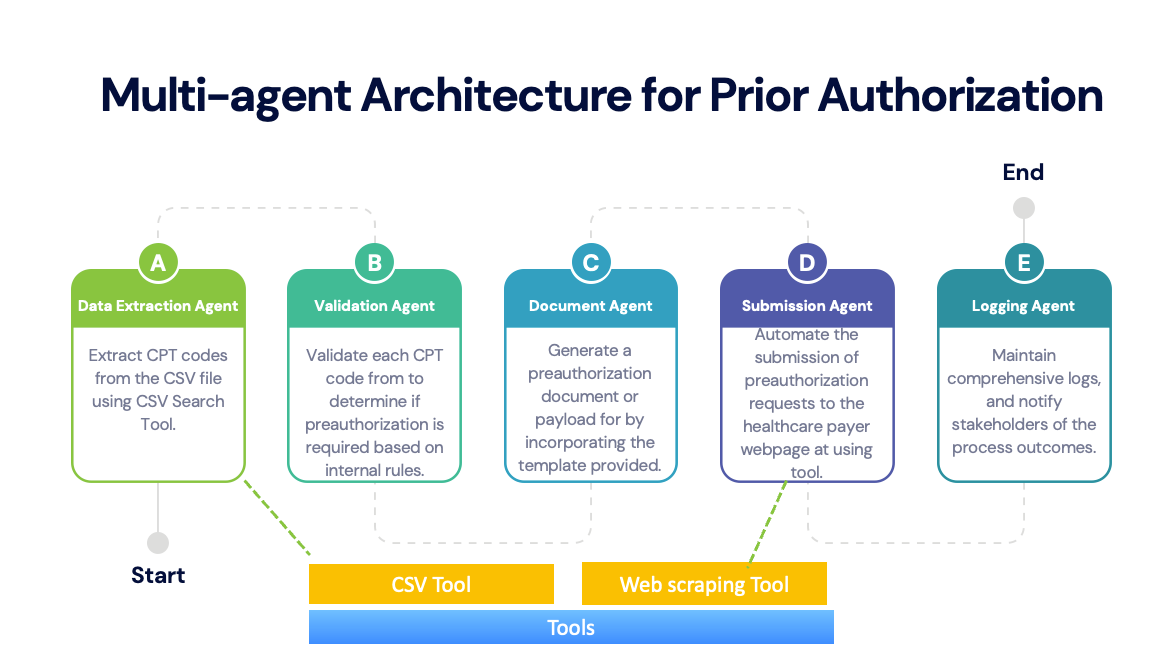
The reference architecture below illustrates, at a high level, how we can develop multi-agent systems using Large Language Models (LLMs). These systems can reason, create, and be equipped with tools to perform specific tasks. Additionally, they can integrate with other applications to achieve complete process automation and augmentation.
(If you need to know how Agentic AI works, refer to my previous post)
Let's explore the different options for building agents!
There are numerous options for building agents, but the choice of platform depends on the organization's IT strategy. Key criteria include data availability, tool availability, and the integration ecosystem. It's essential to align these factors with the organization's overall goals to ensure a successful implementation.
Option-1: Building Multi-Agent with Generalist Platforms
Generalist automation platforms provide flexible foundations for healthcare AI agent development without requiring specialized programming expertise.
UiPath
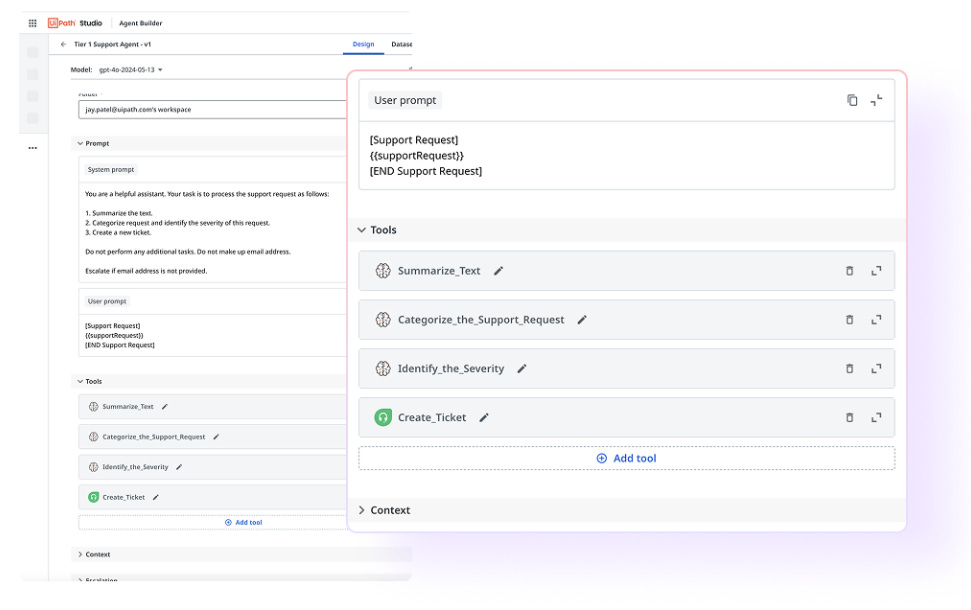
UiPath offers robust capabilities for healthcare multi-agent systems through its Automation Cloud:
Agent Builder: Agent Builder is a secure, simple way to build, test, and launch agents and the agentic automations they’re executing. All from within low-code, fully integrated Studio environment.
Document Understanding: Agents can process insurance forms, clinical notes, and referrals with high accuracy
Orchestrator: Coordinates multiple specialized bots for complex healthcare workflows
Real-world example : A major hospital system implemented UiPath's multi-agent architecture where one agent manages appointment scheduling, another handles insurance verification, and a third prepares clinical documentation bundles—all coordinated through Orchestrator, reducing administrative work by 68%.
Automation Anywhere
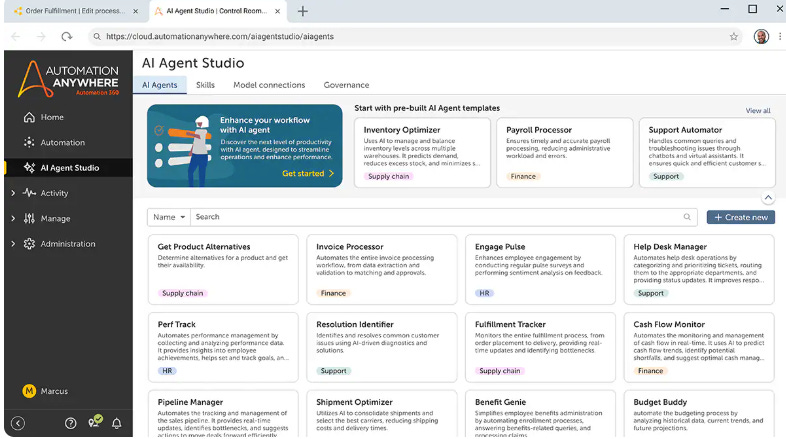
Automation Anywhere's AARI (Automation Anywhere Robotic Interface) platform excels at creating healthcare-specific digital workers:
AI Agent Studio: Easily build and manage safe, secure AI agents to automate any process, anywhere.
IQ Bot: Learns from human corrections when processing healthcare documents
Bot Insight: Provides analytics on agent performance across clinical and administrative tasks
Control Room: Manages agent deployment across departments
Real-world example : A healthcare network created a payer-specific agent ecosystem where each insurance provider has a dedicated bot handling its unique requirements, dramatically reducing claim rejection rates.
Microsoft Power Automate
Power Automate integrates seamlessly with Microsoft's healthcare tools and third-party systems:
AI Builder: Creates custom AI models for healthcare-specific recognition tasks
Connectors: Pre-built connections to EHRs like Epic and Cerner
Process Advisor: Recommends process improvements based on workflow analysis
Real-world example: A primary care network deployed a multi-agent system where one agent monitors patient portal messages, another handles appointment rescheduling, while a third manages prescription refill requests—all working in concert through Power Automate's flow orchestration.
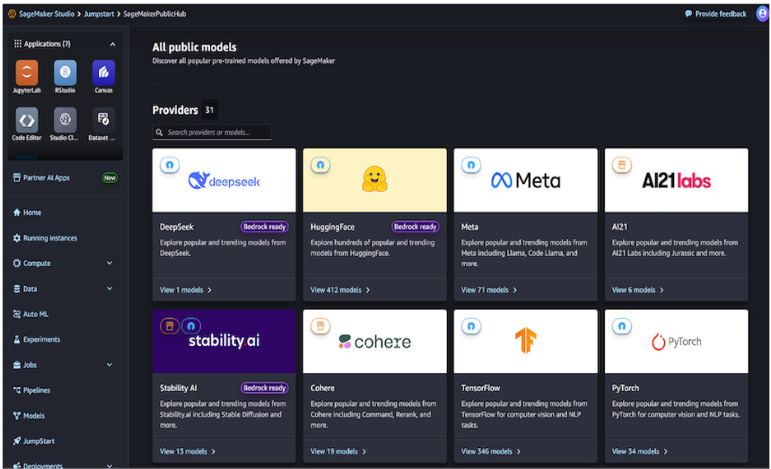
AWS Sagemaker
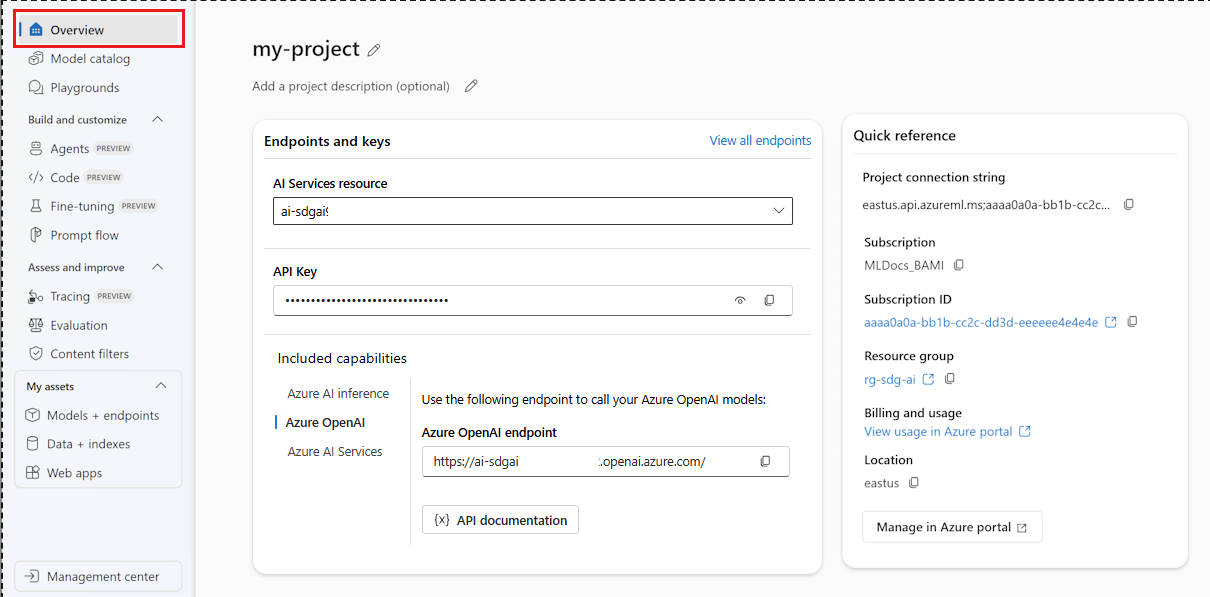
AWS Gen-AI provides comprehensive tools for healthcare multi-agent systems:
Bedrock: Offers healthcare-specific foundation models for agent development
SageMaker: Enables custom training of healthcare-specific agent models
AWS HealthLake: Provides FHIR-native data storage for clinical agent operations
Amazon Comprehend Medical: Powers medical natural language understanding for agents
Real-world example: A regional healthcare system deployed AWS-based agents that extract clinical insights from unstructured notes, route patients to appropriate care pathways, and generate preliminary care plans—reducing clinician documentation time by 35%.
Google Gemini
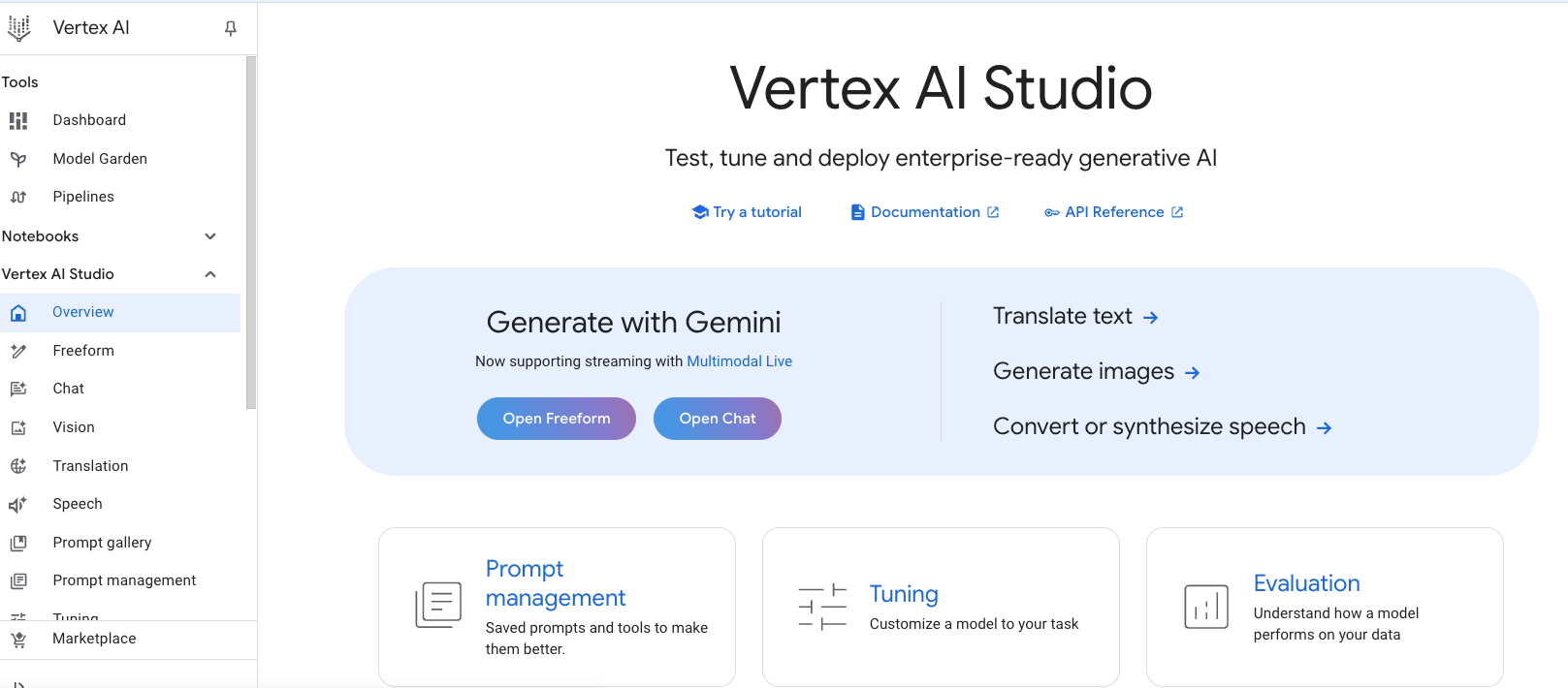
Google Gemini offers multimodal capabilities particularly valuable for healthcare agent ecosystems:
Med-PaLM: Medical-specific language models for clinical agent applications
Healthcare Natural Language API: Extracts medical insights from clinical documents
Vertex AI Healthcare: Specialized tools for healthcare model development
Healthcare Data Engine: FHIR-based platform for healthcare data operations
Real-world example: An integrated delivery network built a Gemini-powered multi-agent architecture where imaging analysis agents work alongside clinical documentation agents and care navigation agents—enhancing diagnostic workflows while maintaining clinical accuracy.
Option-2: CRM-Centric Agent Architectures
CRM platforms provide relationship-centric foundations ideally suited for patient engagement agent ecosystems.
Salesforce Health Cloud
Salesforce Health Cloud offers powerful capabilities for patient-centered agent development:
Einstein AI: Powers intelligent agents for patient segmentation and outreach
Care Programs: Enables condition-specific agent workflows
Lightning Flow: Supports complex multi-agent orchestration
Real-world example: An oncology center built a treatment journey support system with specialized agents for appointment coordination, symptom monitoring, medication adherence, and psychosocial support—all working together through Health Cloud's unified patient record.
AgentForce for Healthcare
AgentForce specializes in healthcare-specific multi-agent architectures:
Patient Journey Mapping: Creates touchpoint-specific agents
Provider Collaboration: Facilitates cross-functional agent communication
Outcome Analytics: Measures agent impact on clinical and financial metrics
Example: A multi-specialty group practice deployed AgentForce's referral management system where specialized agents handle referral intake, insurance authorization, appointment scheduling, and follow-up communication—reducing leakage by 35%.
Microsoft Dynamics 365 Healthcare Accelerator
Microsoft's healthcare-enhanced Dynamics platform offers:
Care Coordination Apps: Templates for agent-assisted care management
Customer Insights: Powers personalized patient engagement agents
Power Virtual Agents: No-code bot creation for common healthcare scenarios
Real-world example: A rehabilitation provider deployed Dynamics-based agents that work together to guide patients through recovery journeys, with specialized agents for exercise adherence, pain monitoring, and functional progress assessment.
Option-3: Verticalized Healthcare AI Agent Solutions (Purpose-built)
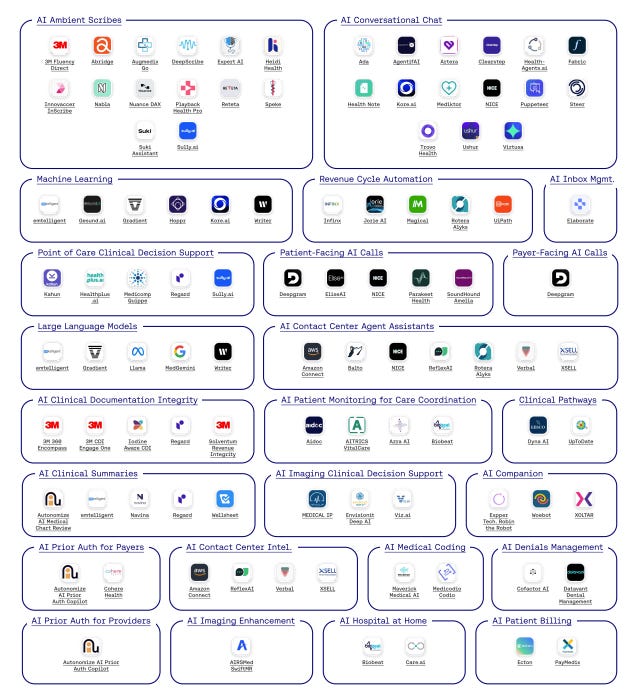
Specialized healthcare AI platforms provide tailored agent ecosystems to address specific industry challenges. The number of vendors and providers in this space is rapidly expanding, driven by the emergence of various large language models (LLMs).Here is the landscape from Elion
Hippocratic.ai
Hippocratic.ai creates clinically-safe patient interaction agents:
Medical Language Models: Safely handles patient inquiries with clinical accuracy
Multimodal Capability: Processes text, speech, and images for comprehensive support
Clinician Augmentation: Works alongside human providers to enhance capacity
Real-world example: A primary care network deployed Hippocratic.ai's triage system where specialized agents handle initial symptom assessment, appointment urgency determination, and preparation instructions—reducing no-shows by 42% while maintaining high clinical safety standards.
Commure
Commure focuses on revenue cycle management agent ecosystems:
Claim Intelligence: Specialized agents verify coding, documentation, and billing accuracy
Payer Communication: Agents handle routine payer interactions and appeals
Financial Clearance: Coordinated agents manage pre-service financial processes
Real-world example: A hospital system implemented Commure's denial prevention system where predictive agents identify high-risk claims before submission, documentation agents ensure complete support, and appeal agents automatically generate evidence-based responses—improving clean claim rates by 23%.
Key Implementation Considerations
When developing multi-agent architectures for healthcare, organizations should:
Start with clearly defined clinical or administrative problems that would benefit from agent automation
Build agent guardrails ensuring clinical safety, regulatory compliance, and data security
Design agent collaboration protocols that support coordinated actions while avoiding conflicting behaviors
Implement human oversight mechanisms that maintain appropriate clinical judgment where needed
Create metrics frameworks for evaluating agent performance on both process and outcome measures
Healthcare providers have numerous options for implementing AI agent ecosystems, from general-purpose platforms to healthcare-specific solutions. The most successful implementations start with well-defined problems, carefully designed agent interactions, and thoughtful integration with existing clinical and operational workflows.